
EACMV-UG, a virulent strain of a viral species causing cassava mosaic disease, is now present in Côte d’Ivoire
Article Overview
EACMV-UG, a virulent strain of a viral species causing cassava mosaic disease, is now present in Côte d’Ivoire
With Controller General of NACassava growing is critical for food security in West Africa, but the crop is under threat from CMD. CMD is endemic to Africa and present in all cassava-producing countries on the continent. However, it is caused by several different species of virus (nine in Africa), which varies in severity. EACMV-UG, a strain of a species that originally emerged in East Africa, was discovered in western Côte d'Ivoire by WAVE. The presence of this particularly virulent strain of a species not expected to be found in West Africa is highly alarming.
A dreaded viral disease
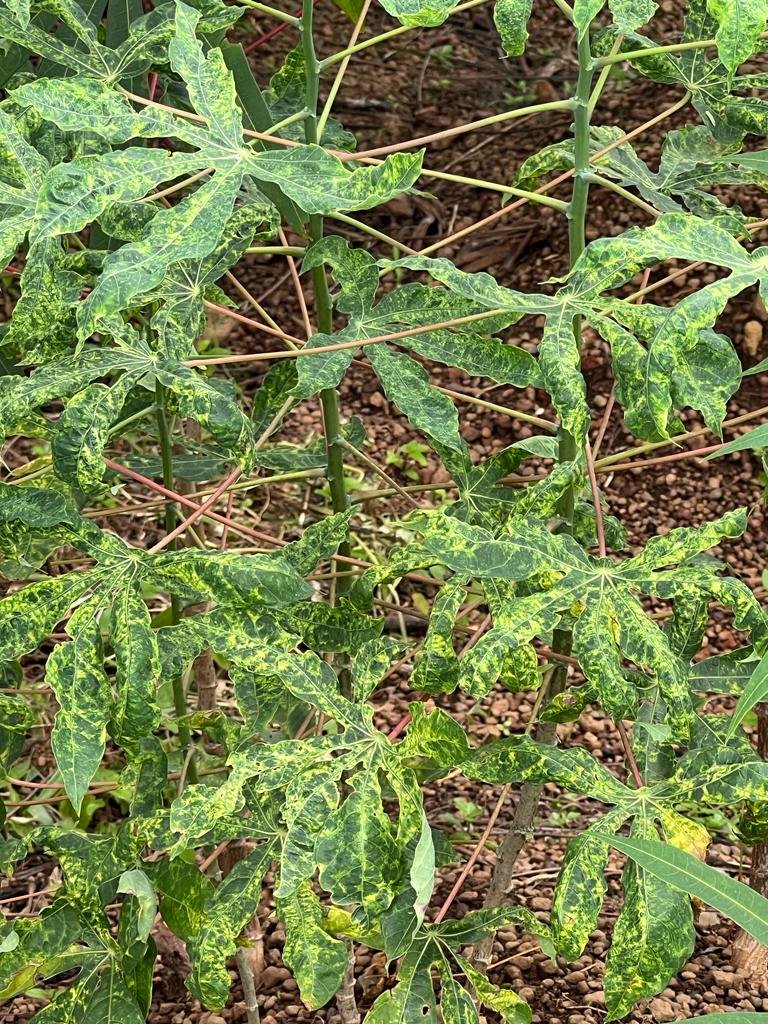
Cassava mosaic disease is a dreaded viral disease that affects the leaves of the plant, leading to discolouration, deformation and reduced photosynthesis, ultimately resulting in a significant drop in yields. The strain recently identified in Côte d'Ivoire is particularly aggressive; it is the Ugandan strain of cassava mosaic virus (EACMV-Ug), which is already known for its devastating effects in East Africa.
In the 1990s, the disease led to a dramatic collapse in cassava production in Uganda, with yields falling from several million tonnes to critical levels, resulting in major economic and food security consequences.
A worrying regional spread
Prior to its outbreak in Côte d'Ivoire, the disease had been reported in several West African countries, including Guinea, Sierra Leone and Senegal. The virus generally propagates through cross-border agricultural trade, particularly the transportation of infected cuttings.
The virus spreads mainly through:
- the use of contaminated plant material (cuttings);
- insect vectors, such as whiteflies.
Economic integration and the high mobility of producers in the region facilitate the rapid spread of the disease from one country to another.
Detection in the west of Côte d'Ivoire
Phytosanitary surveys conducted by WAVE have identified and monitored the spread of the virus in several West African countries.
In April 2026, the Ivorian authorities confirmed the presence of the virus in the west of the country, a strategically important agricultural region for food production.
In response to this situation, emergency measures were taken:
- prohibition of transporting cuttings from infected areas;
- restrictions on the exchange of cuttings between producers;
- increased awareness-raising among farmers.
As there is currently no curative treatment, prevention remains the only effective strategy to limit the spread of the virus.
A major risk to food safety
Cassava is a staple food for millions of people in Côte d'Ivoire and throughout West Africa. Any significant drop in production would constitute a major risk to food safety and could lead to:
- higher food prices;
- a decrease in farmers' incomes;
- worsening food insecurity.
The situation is made all the more worrying by the fact that the disease can remain latent in certain plants, making detection difficult and allowing it to spread silently.
Which solutions are available for containing the disease?
In the fight against this threat, several priority actions must be implemented:
- the production and distribution of healthy plants from specialised laboratories;
- the development of resistant varieties;
- Training farmers in early detection and good agricultural practices;
- strengthening regional phytosanitary surveillance.
WAVE also advocates cooperation between countries, which is essential to curb the spread of the disease. Indeed, the fight against cassava mosaic disease requires a coordinated approach across West Africa, as the disease knows no borders.
Conclusion
The emergence of cassava mosaic disease in Côte d'Ivoire marks a new stage in its spread across West Africa. It highlights the challenges posed by transboundary diseases in the context of increased agricultural trade.
Without a rapid and coordinated response, this phytosanitary crisis could permanently undermine cassava production and food security across the region.
Qs and extended Plant health team
Contact Information
Share This Article
Quick Actions
Our Presence
WAVE RESEARCH operates regional hubs and offices across Central and West Africa to effectively coordinate research, participatory surveillance, and early warning systems.